198123 MAY
Case chronology
Linda Sutton disappears
The revised edition identifies Sutton as 26. Her murder later becomes the subject of Spreitzer’s DuPage prosecution.
Chapter 1 / glossaryThe city. The crimes.
The lives that violence couldn’t erase.
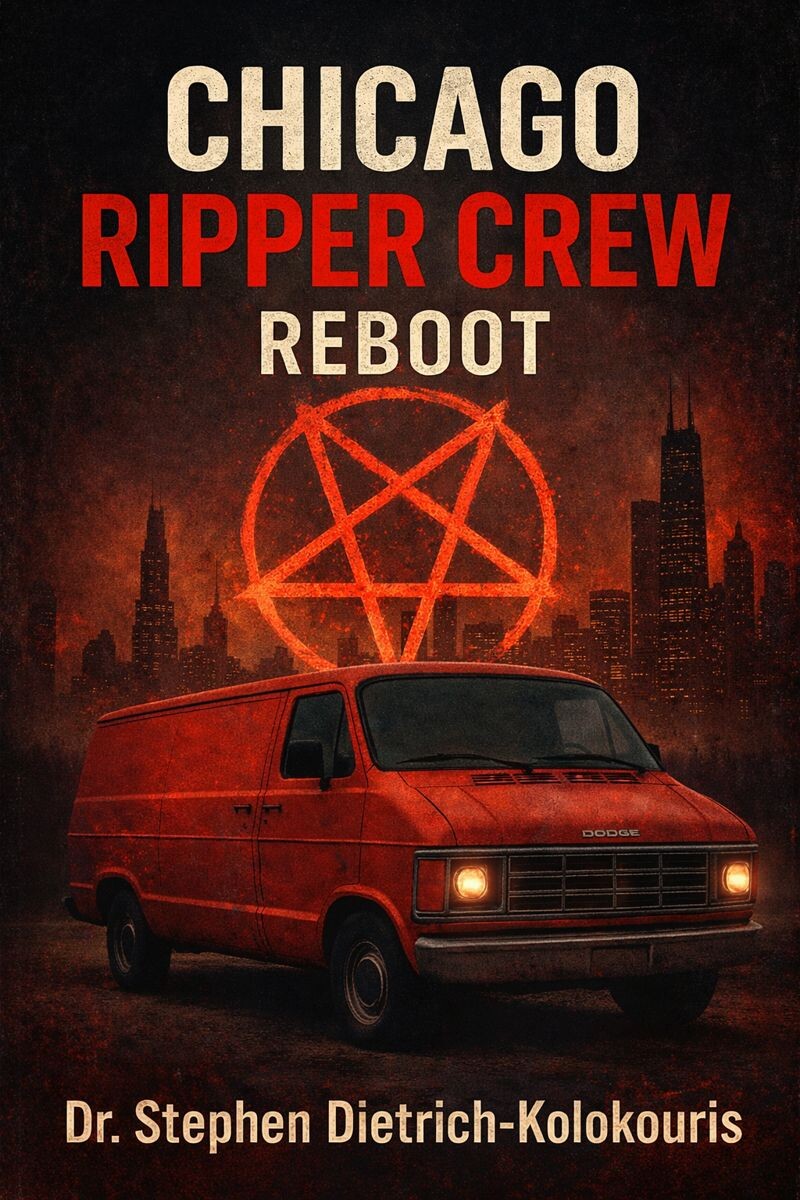 CHICAGO RIPPER CREW / THIRD EDITION
Chicago, 1981. A red van moves through a city already accustomed to looking away.
Chicago Ripper Crew: Reboot follows the crimes of Robin Gecht, Edward Spreitzer, Andrew Kokoraleis, and Thomas Kokoraleis through the people they attacked, the investigation that closed around them, and the imagined perspective of Detective Sarah Novak.
This companion opens the book from another direction. Follow a chapter, examine the legal outcomes, return to a name, or watch material from the original site’s video collection.
The novel combines historical events with invented dialogue, interior lives, and reconstructed scenes. Sarah and Jenny Novak are fictional. Entries identify the book’s narrative inventions; linked court opinions provide a route into the historical record.
Sources & narrative method ↗Open a chapter for its subjects and reading notes. Selected passages retain the book’s language. The narrative contains violence, sexual violence, and strong language.
The city comes first: the Loop, the lake wind, Division Street, and the gulf between the people who are protected and the people who disappear.
The novel enters Gecht’s imagined private world and the relationships through which violence becomes a shared pursuit. His childhood scenes and interior life are narrative reconstruction.
An Elmhurst receptionist arrives to open her office. The chapter gives Lorraine a life beyond the circumstances of her death; its butterfly motif and intimate scenes are fictionalized.
The Dodge becomes a recurring presence as separate attacks begin to suggest a pattern. Sarah Novak’s investigation supplies the novel’s point of view.
Control, complicity, and the bonds between the four men. Reconstructed scenes explore the machinery of their violence without turning imagined dialogue into testimony.
The narrative follows Rose’s ambition and the life interrupted by her murder. Her marketing career has a historical basis; many personal details and the star motif belong to the novel.
The October 1982 shooting widens the story. Tirado is killed and Rosario survives. Their imagined working lives give the chapter its human scale.
A survivor’s identification becomes central to the case against Gecht. The novel expands the attack and imagines an intervention by Thomas; that intervention is not an established historical event.
Detective Thomas Flynn stops the van driven by Edward Spreitzer. Questioning and release precede the later arrests. Novak follows this real investigative turning point within the fiction.
Cook and DuPage Counties, different victims, different charges, years of proceedings. The revised account follows the separate legal outcomes instead of a single collective trial.
The novel returns to the cost of the investigation and Sarah’s unresolved grief. Her sister Jenny and the cold-case storyline are fictional.
Survival, unfinished justice, and the work left behind after the arrests. The final chapter turns toward the lives that must continue.
The revised edition identifies Sutton as 26. Her murder later becomes the subject of Spreitzer’s DuPage prosecution.
Chapter 1 / glossaryThe 21-year-old receptionist is taken as she arrives at the Elmhurst real estate office. The edition records the discovery of her remains on October 10.
Chapter 3 / glossaryThe revised account places her disappearance during the return journey from Streamwood toward Lombard, rather than after a diner closing in Chinatown.
Chapter 4 / glossaryThe edition records the discovery of Delaware’s body in late August and Davis’s body on September 8. Their individual entries distinguish narrative characterization from the case background.
Chapters 4 & 6 / glossaryHer identification helps build the case against Gecht. The novel uses October 6; the 2008 appellate opinion dates the attack to October 5. Both readings are retained in the source notes.
Chapter 8 / Gecht, 2008The appellate record describes Detective Thomas Flynn stopping Spreitzer in the van. Questioning, photographs, and a hospital lineup follow; Spreitzer is allowed to leave.
Spreitzer, 1991Spreitzer’s November 5 questioning and the subsequent investigation bring the cases together. The arrests unfold over time.
Spreitzer, 1991 / Kokoraleis, 1989The revised edition follows Gecht’s 120-year sentence, Spreitzer’s separate Cook and DuPage outcomes, and the Borowski prosecutions of the Kokoraleis brothers.
Chapter 10Sarah carries the investigation into her cold-case work and the search for answers about Jenny. Both sisters and this continuing storyline are fictional.
Chapters 11–12Separate charges. Separate proceedings. Open each file for the outcome recorded in the revised edition and relevant court material.
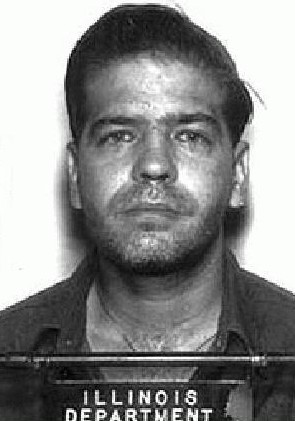 FILE / 01
120 years
Convicted in the Beverly Washington case of attempted murder, aggravated kidnapping, rape, and deviate sexual assault. He was not convicted of murder.
Court record / Gecht, 2008 ↗ FILE / 02
Death sentence commuted
Four natural-life terms in the Cook County cases; a death sentence in the Linda Sutton case followed in 1986. The revised edition records its commutation to life without parole in 2003.
Court record / Spreitzer, 1991 ↗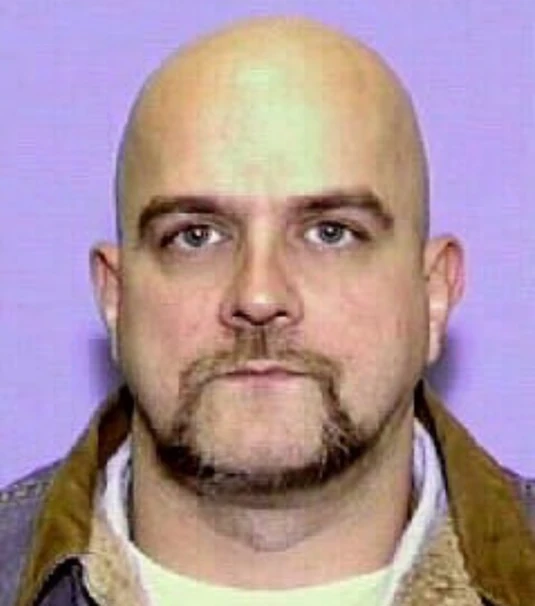 FILE / 03
Executed · 1999
Convicted and sentenced to death in the Lorraine Borowski case. The revised edition records his execution on March 17, 1999.
Court record / Kokoraleis, 1989 ↗ FILE / 04
70 years · released 2019
After an earlier conviction was reversed, he pleaded guilty to Borowski’s murder. The revised edition records a 70-year sentence and his release in March 2019.
Edition reference / Chapter 10 & glossary ↗The book returns to the people whose lives were taken and the people who survived. Their names deserve more space than the manner of the violence.
These are the six people killed and three survivors named in the book’s principal narrative. This is a reading index, not a claim to an exhaustive historical victim count. Ages follow the revised glossary.
Her disappearance in May 1981 and the subsequent prosecution appear in the court record.
Edition reference / Chapter 1The Elmhurst receptionist at the heart of the Borowski prosecutions. The butterfly motif belongs to the novel.
Edition reference / Chapter 3The revised edition places her disappearance on the journey from Streamwood. Her personal scenes are reconstructed.
Edition reference / Chapter 4The revised glossary identifies her as a student. The bartender characterization belongs to the fiction.
Edition reference / Chapter 4Her life in marketing and sales informs the chapter. The star motif and many intimate details are fictionalized.
Edition reference / Chapter 6Killed in the October 6 shooting. His work and family scenes in the novel are imagined.
Edition reference / Chapter 7Her identification is central to the Gecht prosecution. Her later boutique storyline and Thomas’s intervention are fictional.
A survivor represented in the revised manuscript. Her painting and expanded personal story are narrative inventions.
Wounded in the October 6 shooting. The revised edition identifies him as 18; his DJ ambitions are fictionalized.
The book trailer, new promotional films, and videos retained from the original companion. Playback begins only when you choose it.
Retained media file. Broadcaster and original air date have not been independently established here.
Open video separately ↗Retained media file. Consult the recording itself for its reporting and context.
Open video separately ↗A new promotional film for the revised companion and the world of Chicago Ripper Crew: Reboot.
Open video separately ↗A short closing ident for the companion’s promotional collection.
Open video separately ↗The original green terminal returns as a reading desk for the revised edition’s forensic and narrative distinctions.
The revised manuscript describes blood groups, secretor status, enzyme markers, fibers, and physical evidence. It does not present the original investigation as a modern DNA identification exercise.
Gecht’s later requests for DNA testing are discussed in the 2008 appellate opinion. Those post-conviction requests are a different matter from the methods available during the original investigation.
Read the appellate opinion ↗The red Dodge is a link between the survivor’s account and the investigation. The revised glossary describes blue-and-white feathers at the mirror and a wooden partition inside the van.
The book’s partial number plate beginning with “7” is fictionalized. The October 20 stop by Thomas Flynn appears in the Spreitzer appellate record.
Read the account of the stop ↗Sarah Novak’s grief for her sister Jenny gives the novel its investigative point of view. Their histories, Sarah’s private thoughts, and her continuing cold-case work are fiction.
The real investigation involved Chicago and suburban detectives. The companion keeps Sarah’s narrative alongside that record without attributing her actions to an actual officer.
Return to Chapter 9 ↗READER’S RESEARCH DESK / These are companion notes, not police reports, autopsy records, or a law-enforcement database.
The revised third edition is the basis for this companion’s chapter notes, glossary details, and narrative distinctions. It describes its use of fictional scenes, dialogue, symbolism, and personal histories.
The opinions linked here are primary legal texts hosted by Justia. They document particular proceedings and evidence discussed by the courts; they are not a substitute for the entire investigative file.
The revised manuscript uses October 6, 1982, for Beverly Washington’s attack. The background section of People v. Gecht (2008) gives October 5. The companion identifies the discrepancy rather than silently treating the two dates as identical.
Search by ISBN: 9798288576928
Check the edition shown by the retailer.